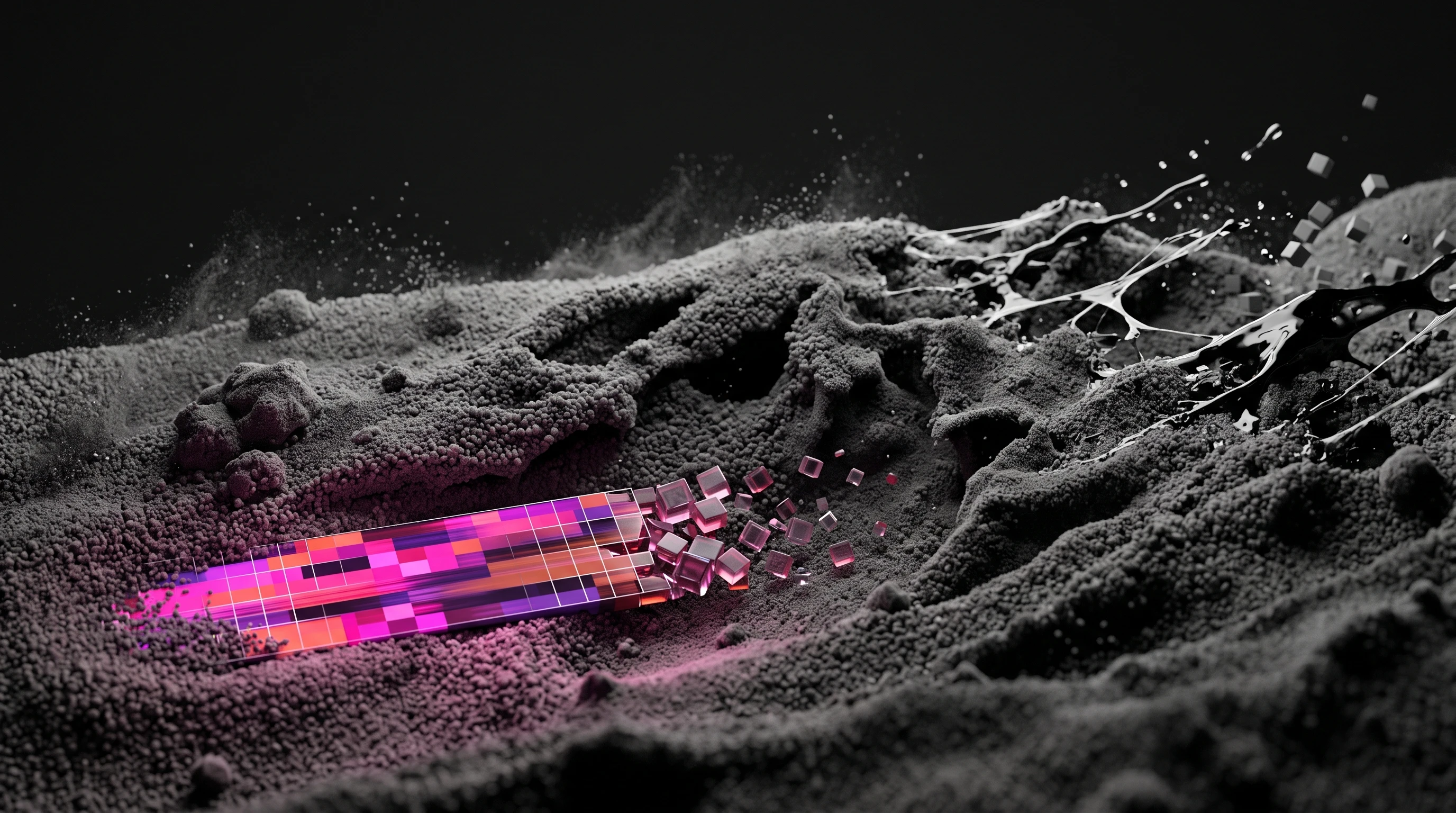
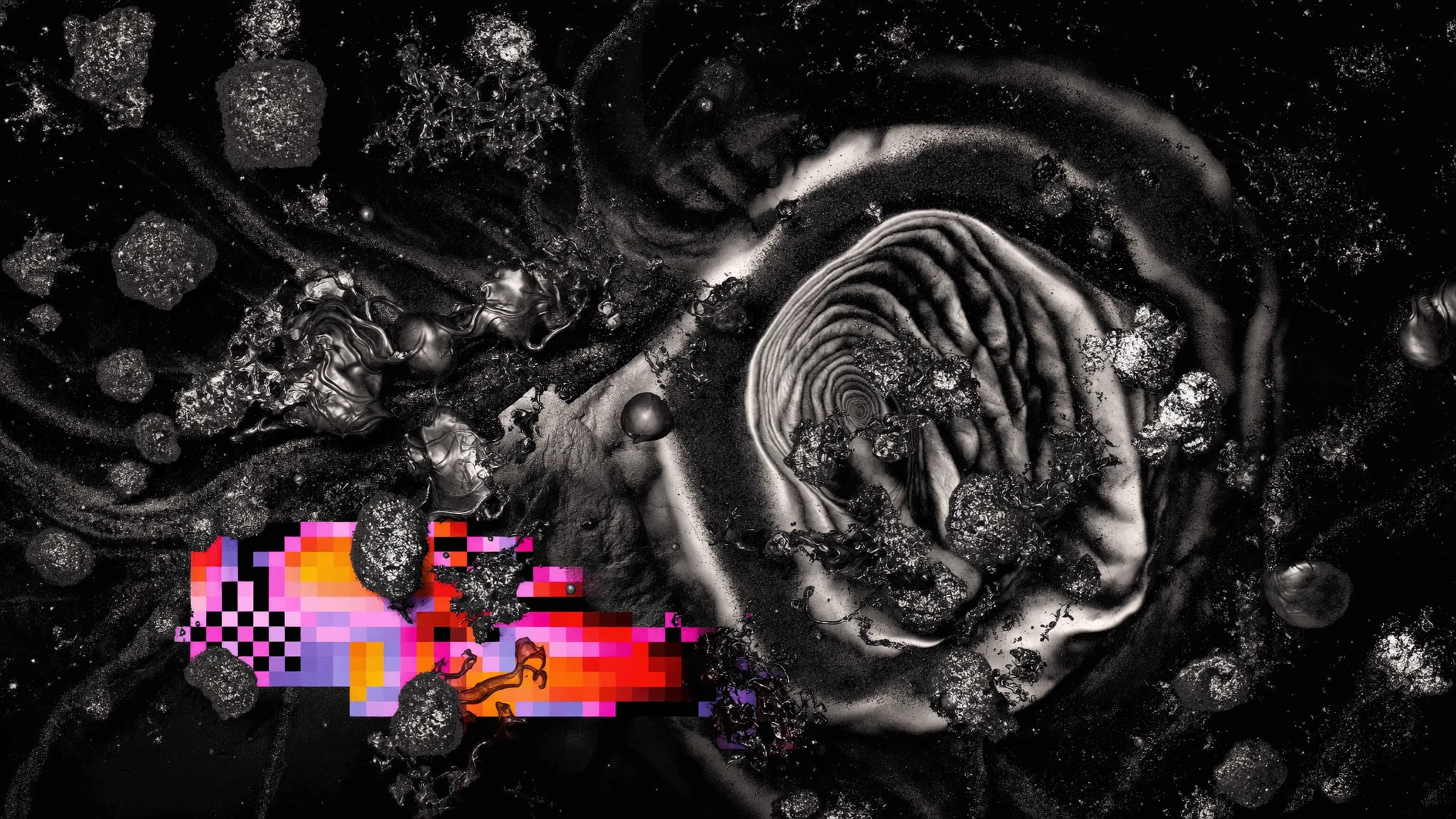
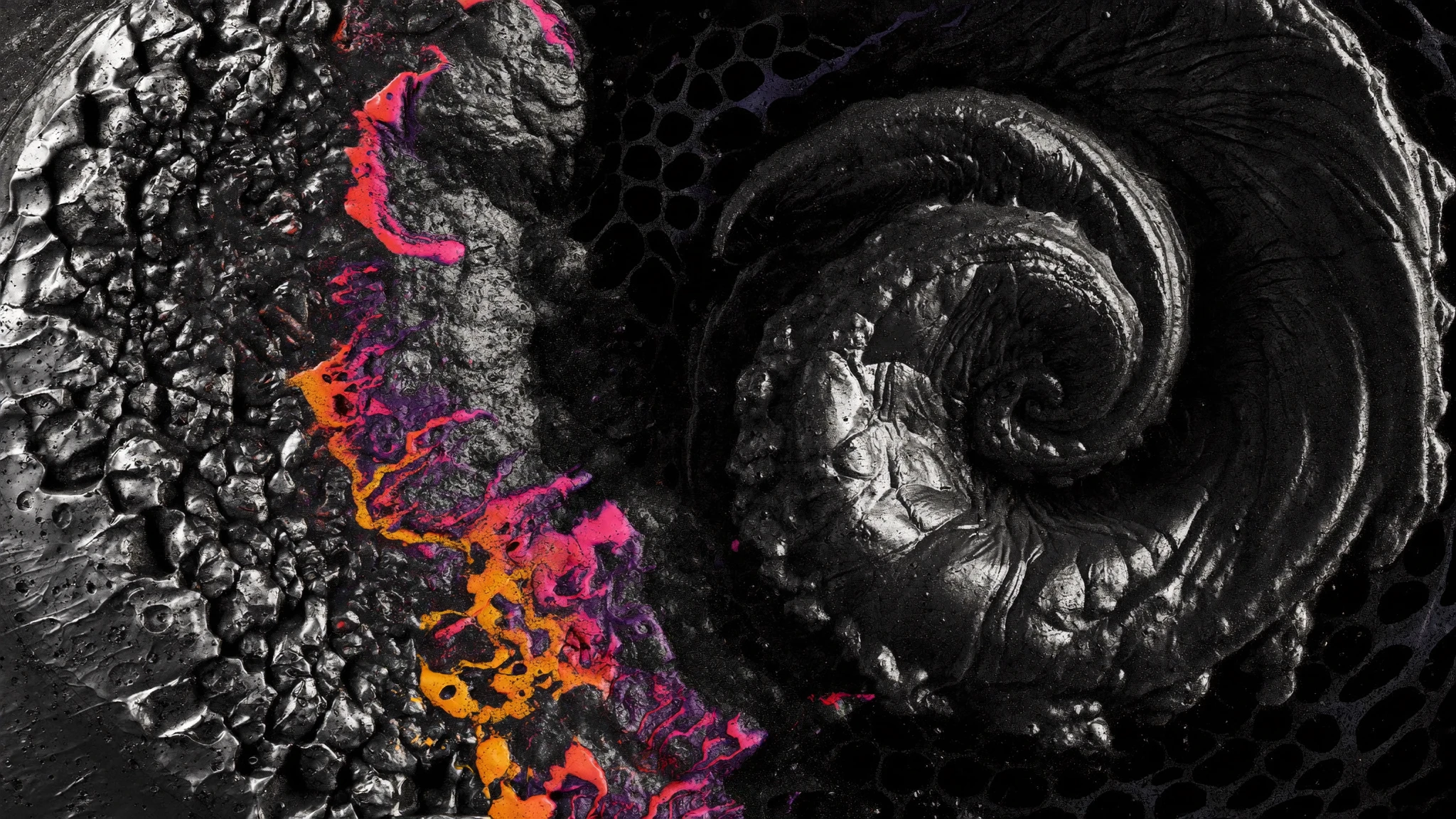
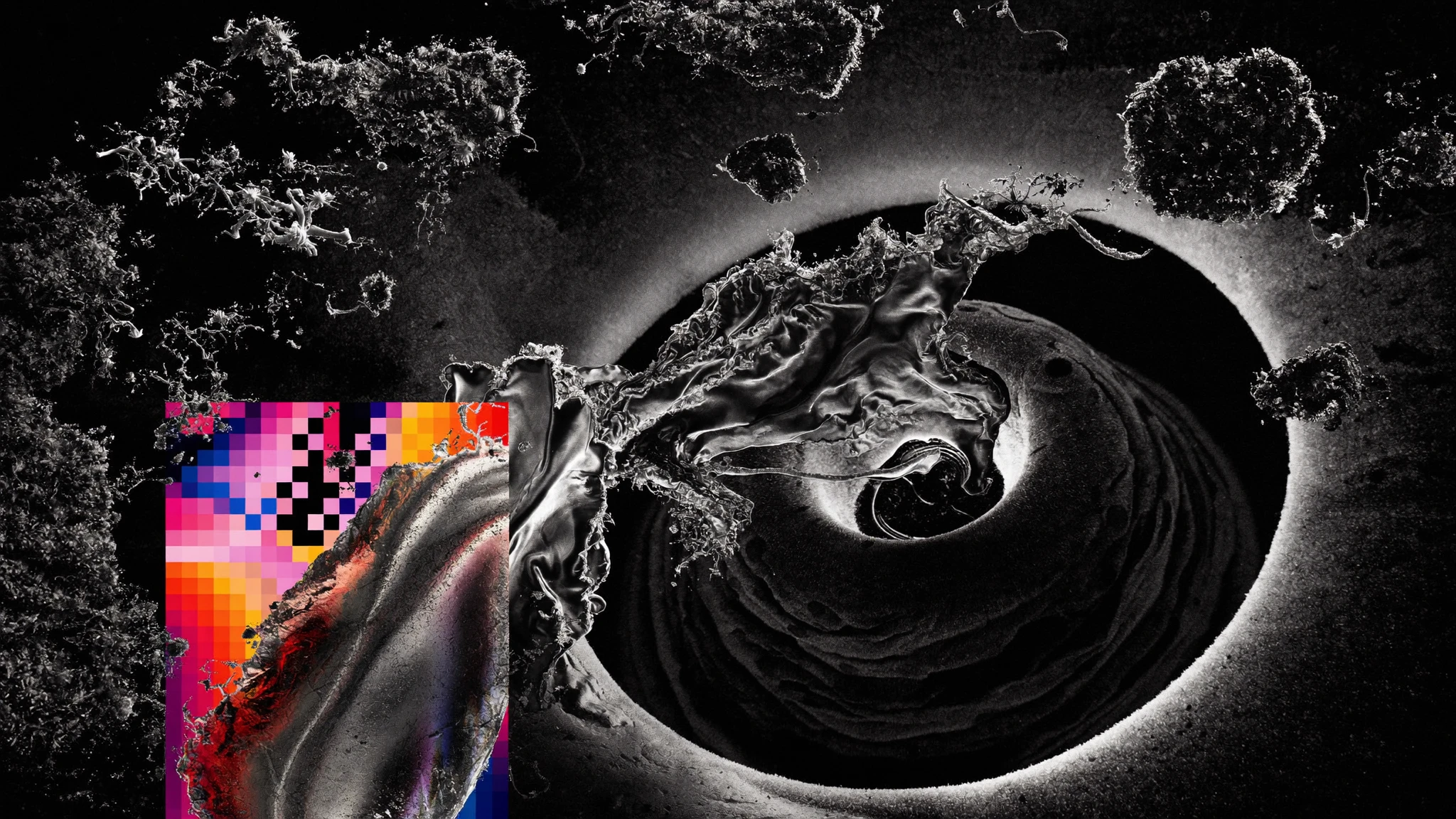
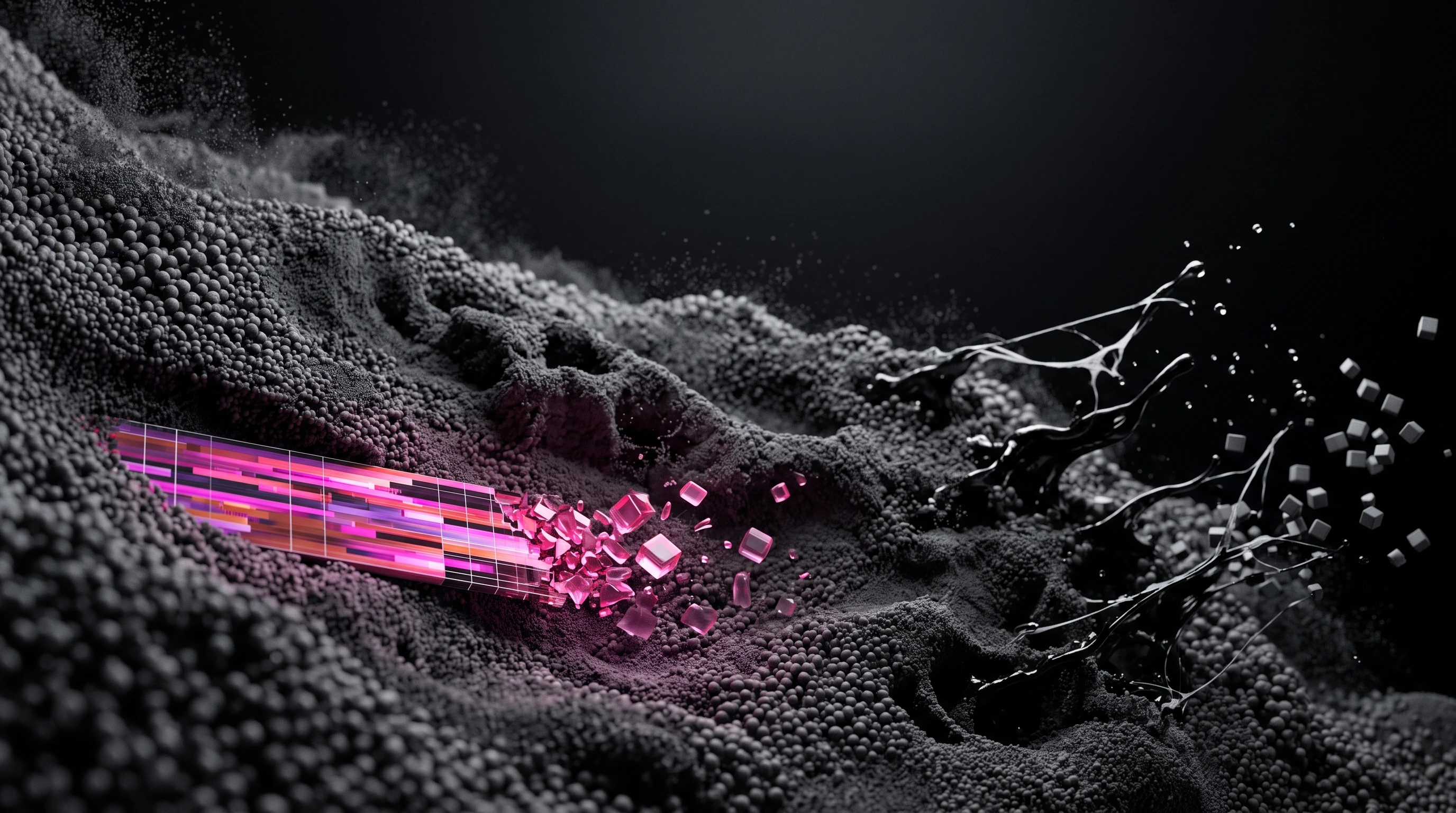
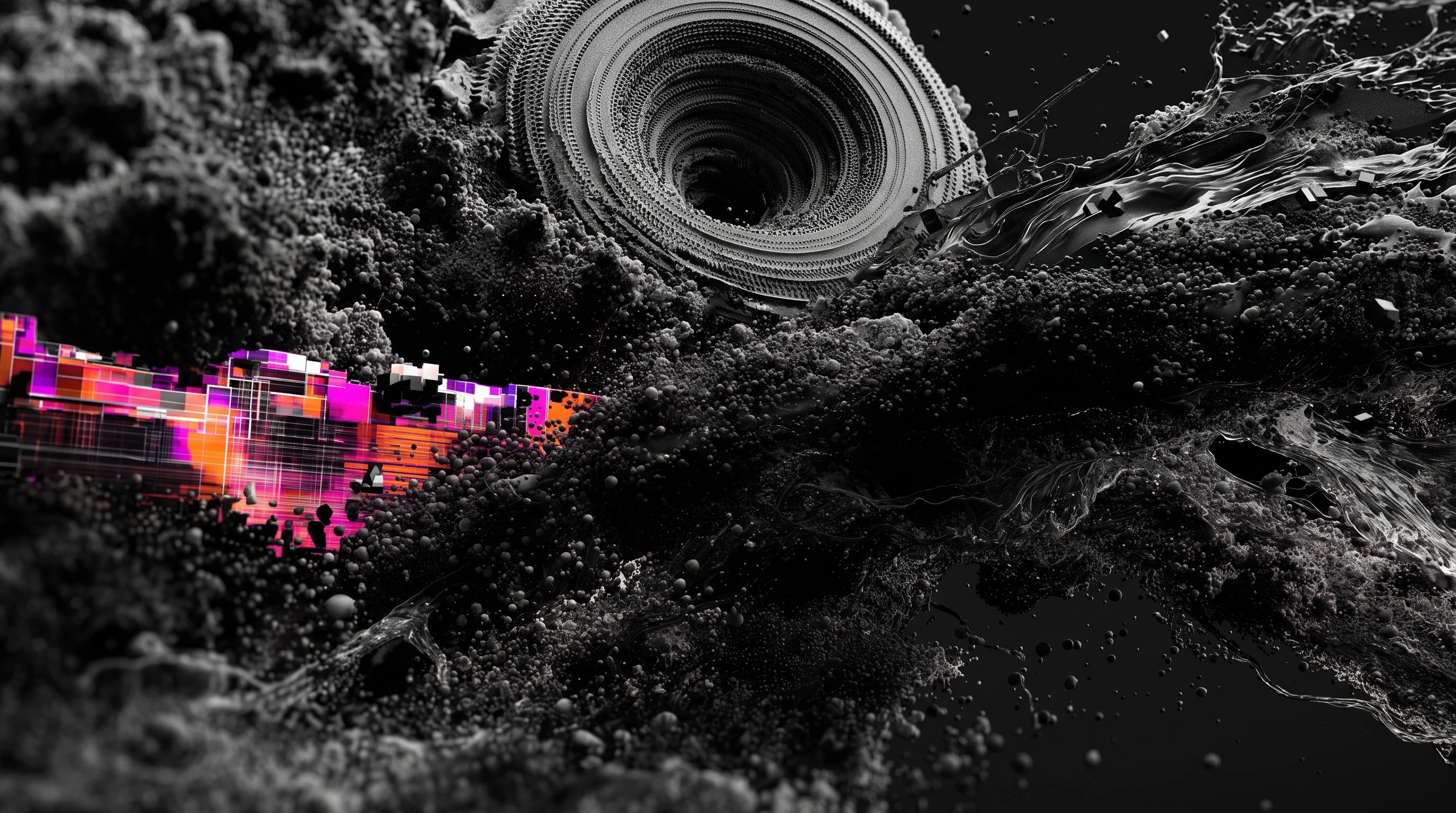
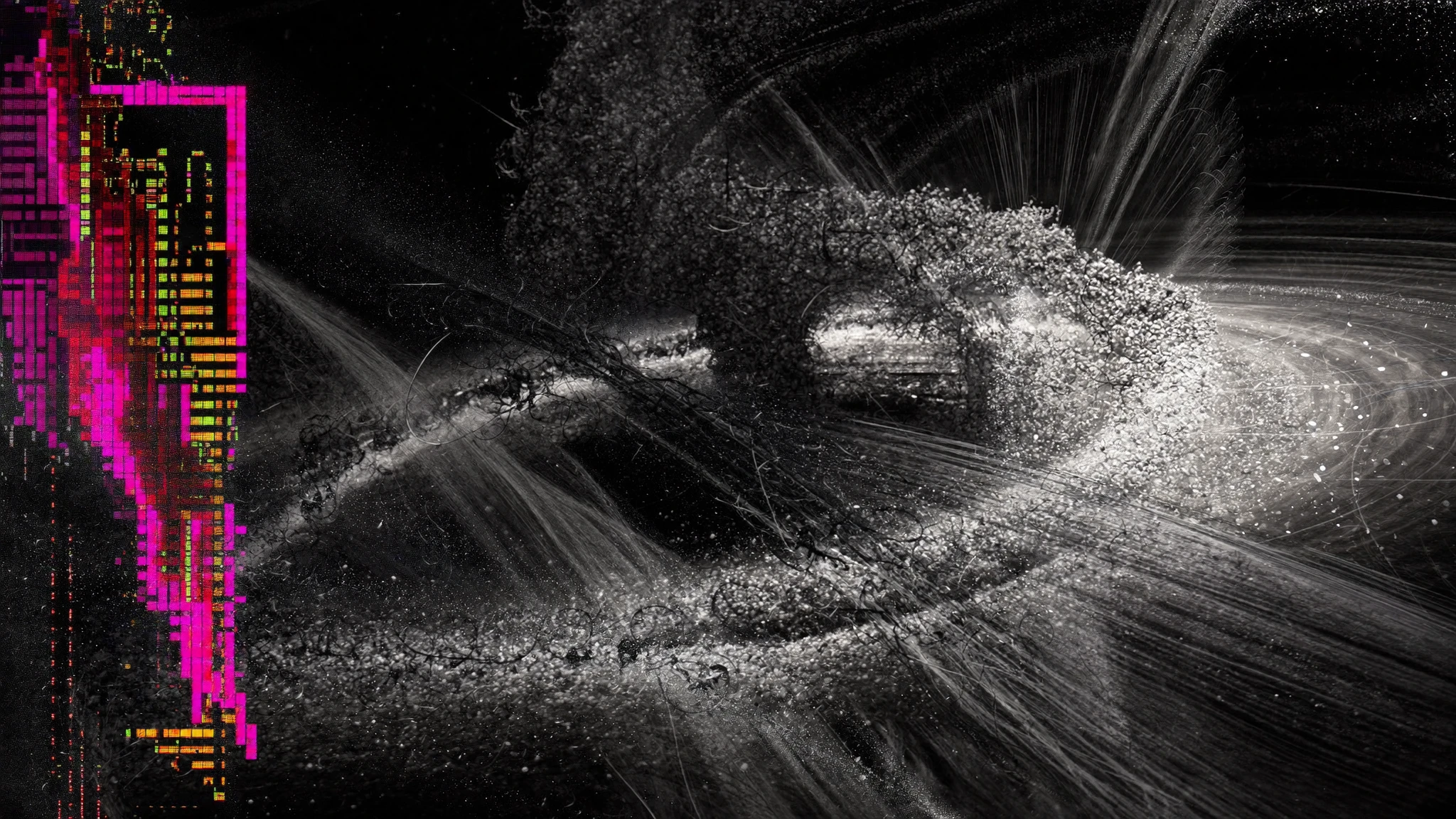
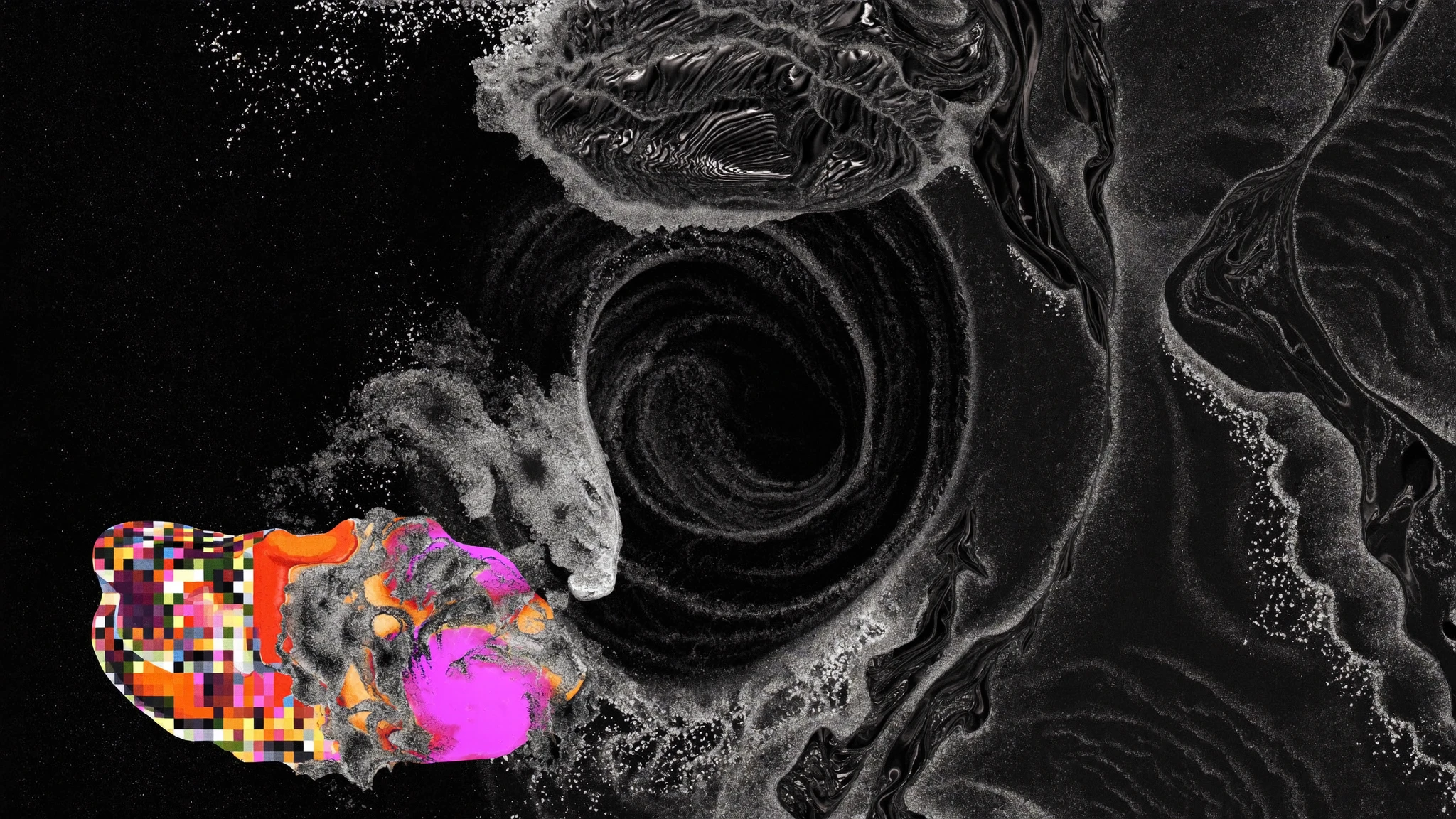
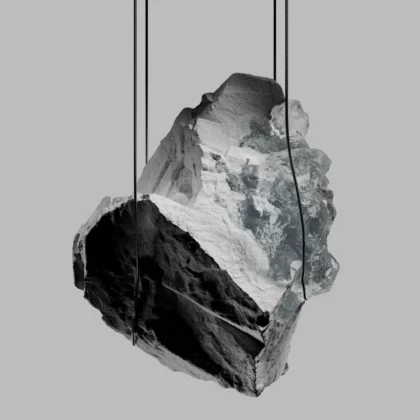
For years, I built simulations in Cinema 4D, setting up emitters and pushing particle systems through force fields. It’s always a fascinating, almost hypnotic process: you define gravity, mass, and drag, while the machine meticulously calculates every single frame. But there’s none of that in this series.
No solvers, no 3D scenes, no emitters. Here, the material falls, settles, drifts, and breaks apart simply because the model has seen enough physics to mimic its behavior convincingly.
The main obstacle was the form itself. Generative models naturally push particles toward soft, round, generic shapes. I wanted to pull crisp geometry—triangles, cubes, rigid rods—directly out of the generation stage without touching 3D software. The fix came down to a single, precise word in the prompt. From there, the focus shifted: finding the tipping point where physics dissolves into pure visual form.
Pipeline & Stack
Reference & Still: Nano Banana Pro / ChatGPT 2 Image — form, material, palette
Upscale: Tapas Video Upscaler — detail enhancement and upscaling
Animation: Seedance 2.5 — image to motion and animatics
Post: After Effects — timing, color grade, seamless loop
Edit: Premiere Pro — final assembly and editing
No simulation, no math. The material behaves simply because the model memorized its nature.